




Read time: 2 mins
Canadians concerned about scams are increasingly aware of the risks posed by fraudulent emails, texts, calls, and online schemes, as new research shows that while only a minority have personally fallen victim, nearly everyone has been impacted either directly or indirectly. The findings highlight widespread concern, consistent experiences across demographics, and a growing emphasis on personal protective behaviors.
Key Takeaways
- Three in ten Canadians say they have personally fallen victim to a scam, while half know someone who has, showing the broad reach of fraudulent activity.
- Concern about falling for a scam is high nationwide, with three quarters of Canadians expressing worry and taking at least some protective action.
- Older Canadians and women are more likely to adopt multiple protective behaviors, including cautious digital habits and technical safeguards.
% Fallen For a Scam
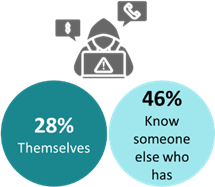
While only three in ten Canadians say they have personally ever fallen victim to any type of scam, such as an online scam, phishing attempt or phone scam, half know someone else who has, highlighting the widespread reach of fraudulent activity. The likelihood of either having personally fallen victim to a scam or knowing someone who has is consistent across the country, across age groups, genders, and other demographics, underscoring how scams affect all segments of the population.
Concern About Falling for a Scam
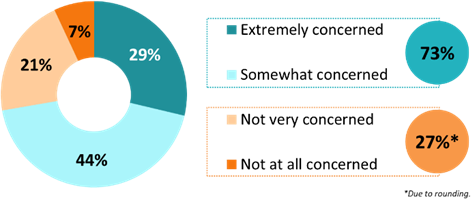
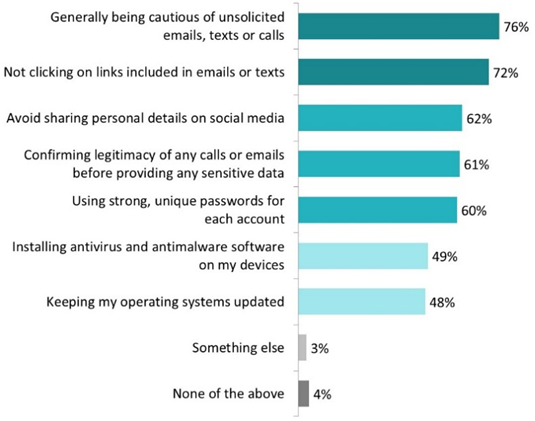
Concern about scams is high, with three quarters of the population saying they are concerned about the possibility of falling for a scam, and the vast majority of people are taking at least some type of action to protect themselves. Indeed, three quarters say they are generally cautious about unsolicited emails, texts or calls, and seven-in-ten say they don’t click on links included in emails or texts. Six-in-ten don’t share personal details on social media, or make sure to confirm the legitimacy of any calls or emails before providing any sensitive data to others. Many are also taking a more technical approach, such as using strong, unique passwords on each account, installing antivirus and anti-malware software on their devices, or keeping their operating systems updated. All types of actions are much more common among older Canadians, aged 55 and up, compared to those in younger cohorts. In addition, women are much more likely than men to be taking action against scams.
Protective Actions Taken
“These results clearly show the proliferation of scams and Canadians are clearly worried,” says Margaret Chapman, COO at Narrative Research. “In such an environment, it’s imperative that people keep up to date and remain vigilant against fraudulent activity, while also understanding which types of calls, texts and emails are legitimate outreach from companies people can trust.”
Results are from an online survey conducted in partnership between Narrative Research and the Logit Group. The survey was conducted between December 9 – 15, 2025 with 1,233 Canadians, 18 years of age or older from the Logit Group’s online Canadian Omnibus. Data were weighted based on the 2021 Census, by gender, age, and region to reflect actual population distribution.
Download a PDF version with data tables
FAQs
While only a minority report being direct victims, exposure is widespread, with many Canadians knowing someone who has been affected by a scam.
Most Canadians report being cautious with unsolicited messages, avoiding suspicious links, limiting personal information sharing, and using stronger digital security practices.
Concern levels are consistent across demographics, but older Canadians and women are more likely to actively take multiple protective measures
For more information, please contact:
Margaret Chapman, COO & Partner, Narrative Research – 902.493.3834, mchapman@narrativeresearch.ca or Sam Pisani, Managing Partner, Logit Group – 416.629.4116, sam.pisani@logitgroup.com.
Narrative Research is a non-partisan, 100% Canadian-owned research company, certified as a Women Business Enterprise (WBE). Narrative Research provides clients with state-of-the-art research and strategic consulting services.
The Logit Group is a leading North American data collection and market research execution company headquartered in Toronto, conducting large-scale projects for a variety of well-known research agencies and brands. Logit employs industry-best technologies.