



Read time: 6 mins
Your project load is growing, but your headcount isn’t. Between the new bid and the tracker set to go live in four markets next week, the question shifts from whether to bring in outside help to who you can trust. For most research teams managing multi-country studies, tracking programs, and multiple concurrent projects, working with a global research operations hub is not a workaround. It is a structural decision that determines how well your team can scale.
Key Takeaways:
- Operational depth and quality control matter more than geographic reach alone
- The best global research operations partners integrate flexibly into different stages of the workflow
- A true partner proactively solves fieldwork and execution challenges before they impact clients
Choosing a global research partner is one of the most consequential operational decisions a research director makes. Get it right, and you gain a reliable extension of your team that handles execution complexity. You stay focused on analysis, strategy, and client relationships. You can also increase profitability by increasing capacity without increasing overhead. Get it wrong, and you're managing a vendor failure in the middle of a live study, explaining to a Fortune 500 client why data quality slipped.
The Cost of In-house Global Market Research Operations
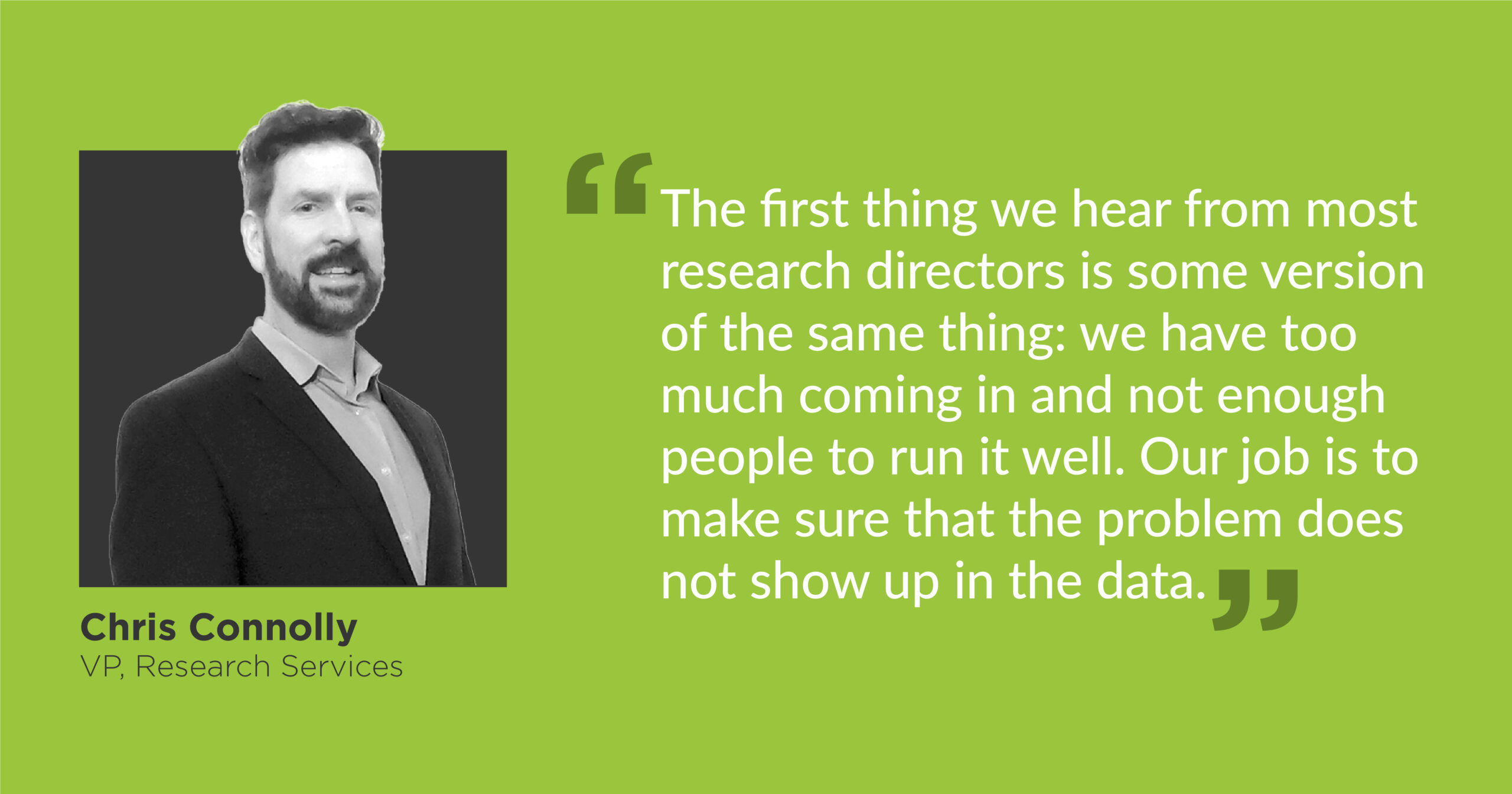
Most research directors already know their teams are stretched. The stakes get higher with international research operations, where each market brings distinct sample landscapes, local regulatory requirements, and cultural considerations that affect questionnaire design. Vendor relationships take years to develop, and when execution is spread too thin across too many markets, data quality is usually the first thing to slip. For a research director whose reputation depends on the integrity of every dataset, that is not an acceptable risk. Sophisticated fraud detection and data quality management, multi-mode methodology execution, and real-time quality monitoring require ongoing infrastructure investment that most internal teams cannot sustain at scale.
Evaluating Global Market Research Operations Companies
Not all market research companies with international capabilities are structured the same way, and the differences matter when you are selecting a partner for complex, high-stakes work. The right evaluation comes down to four things: how deep their operational infrastructure goes, how flexibly they can engage, how accountable they are when things get difficult, and whether their experience matches the complexity of the work you are bringing them. Understanding how a potential partner performs across all four of those dimensions is what separates a good fit from a costly mistake.
Operational depth matters more than geographic reach. A partner's ability to field global research is only as valuable as the quality of the infrastructure behind it. For a research director whose reputation is tied to every dataset that leaves their team, this is the most important thing to get right. Look for established vendor relationships, in-country expertise, and quality control processes built into the workflow rather than added after the fact. Ask specifically how they manage sample consistency across markets in a multi-wave tracker, and what happens when quality flags appear mid-field.
Flexibility to enter at any stage is equally important. Strong global project management means a partner can step in at the specific point where your team needs support, whether that is sample sourcing and field execution, programming and data delivery, or full end-to-end management from screener through final dataset. If a potential partner only works well when they own the entire workflow, that is a constraint you will feel on every project that does not fit neatly into a single model.
When you are accountable to a client, you need a partner who treats your deadlines and quality standards as their own. That means real-time project updates, early flagging of field issues, and a team that solves problems before they become your problems. Responsiveness is not a soft requirement. It is the mechanism by which trust gets built across projects.
Experience handling complex, multi-mode research studies across diverse audiences signals that a partner has solved the kinds of problems you are likely to encounter. The depth of that experience should be verifiable — ask for examples from studies that resemble yours in scope, methodology, and market complexity.
Why a Global Research Operations Hub Outperforms a Vendor Roster
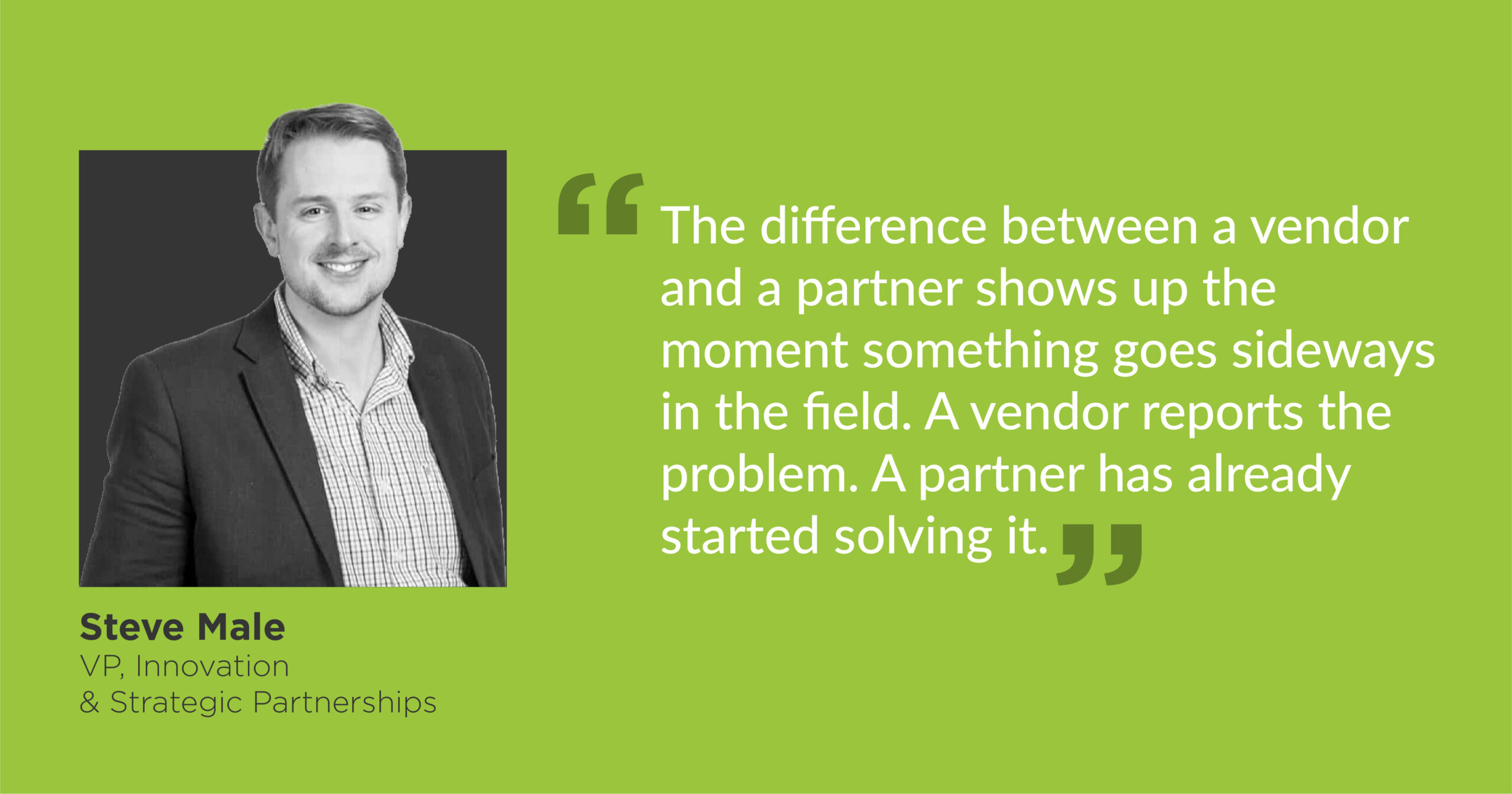
A vendor completes a task, while a partner understands why it matters and takes responsibility for the outcome. That distinction is one that experienced research leaders feel immediately, and it determines how much overhead a relationship creates versus how much it removes.
A global research operations hub functions as a structural extension of your team, one that maintains the infrastructure, relationships, and capabilities that would be prohibitively expensive to build internally and impossible to scale on demand. The partnership model you need will vary by project type, and the best global partners accommodate that variation without friction.
For a discrete ad-hoc study, you may need full-service execution covering recruiting, programming, hosting, data delivery, and quality assurance. For a long-running tracker you have already established, you may only need reliable qualitative recruitment and field management in specific markets. For a bid you are trying to win, you may need a partner who can quickly assess feasibility and give you the numbers to build a competitive proposal. The ability to shift between these modes without renegotiating the relationship every time is a sign of a mature partner, not just a capable one.
Questions Worth Asking Before You Commit to a Market Research Partner
Research directors who find the right partner usually get there by asking direct questions early:
- How does the partner ensure consistency across markets in a multi-wave tracking study?
- What does their quality control process look like mid-field and not just at data delivery?
- Can they show examples of projects where they entered mid-study and what that transition looked like?
- How do they handle scope changes or timeline compression once a study is live?
The answers to these questions reveal more about operational maturity than any proposal document, and a confident partner will welcome them.
Have a project you're looking to field? Get a quote from Logit today, and a member of our team will be in touch shortly.